Monday, January 22, 2018

MINORITY STRESS THEORY

Lesbian and bisexual women are at a higher risk for mental health issues and substance use disorders when compared to their heterosexual peers. In general, sexual minority women engage in substance use including alcohol, tobacco and illicit drug use more often. This population also reports higher rates of depression and anxiety than their counterparts. Although the reason for these increased rates remains unknown, there is one possible explanation - minority stress - that helps begin the process of understanding the unique health and mental health needs of this population. Minority stress theory explains and predicts how stressors related to one’s minority identity status impacts lesbian and bisexual women in deleterious ways. These stressors are thought to then impact mental health and substance use outcomes such as the ones described.

Minority stressors can be separated into two categories. The first type is distal stress. Distal stressors are stressors that are present in one’s environment and tend to occur at the social or interpersonal level. Examples include - discrimination, real or perceived stigma, harassment or any type of violence involving or thought to be involving one’s sexual identity. The second category of stressors are proximal stressors. These stressors manifest internally and include feelings of rejection, internalized homophobia or identity shame. The two types of stressors work in tandem impacting one’s mental health and substance use behaviors.

According to the minority stress theory, distal and proximal stressors can be moderated by the presence of social support. Social support has been shown to decrease the magnitude in which stressors are internalized thereby decreasing the likelihood of adverse mental health and substance use issues from developing or worsening. Increasing social support is seen as one of the primary intervention techniques in reducing the risk of mental health issues and substance use disorders among lesbian and bisexual women as explained using the minority stress theory. It is therefore critical for medical providers to ask their patients who identity as a lesbian or bisexual about their experiences with minority stressors to assess risk, as well as to provide support in the form of a provider-patient relationship and/or social resources. Open conversation helps develop meaningful relationships and fosters a supportive environment where these women can disclose their identity comfortably and receive the support and resources to help mitigate the presence of minority stressors.

References:
  • Lehavot, Keren, and Simoni, Jane M. "The Impact of Minority Stress on Mental Health and Substance Use among Sexual Minority Women." Journal of Consulting and Clinical Psychology 79, no. 2 (2011): 159-70.
  • Meyer, Ilan H. "Prejudice, Social Stress, and Mental Health in Lesbian, Gay, and Bisexual Populations: Conceptual Issues and Research Evidence. (Author Abstract)." Psychological Bulletin 129, no. 5 (2003): 674-697.

 Luke Schmidt                                                                                                                                                      DUCOM 2018

Monday, January 15, 2018

Your "Flu-pocalypse" Survival Kit


Brace yourselves, everyone...flu season is not over yet! This year, the flu has taken a toll on a majority of individuals in the United States. Patients who presented with influenza-like illnesses made up of 6.3% of outpatient visits, which is larger than the national baseline, 2.2%. The widespread nature of the flu this season is compounded by the ability of the virus to mutate, thereby making vaccination less ineffective this year. The influenza A strain, H3N2, is one of the worst, and it may especially impact seniors, children, and pregnant woman. 
However, given the statistics for this year's flu, getting a flu shot remains one of the best methods to prevent or at least mitigate the severity of symptoms, because of the body's ability to produce antibodies to fight off the disease. Vaccination may help prevent serious disease resulting in hospitalization and death. In fact, it was shown that parents with infants under 6 months of age can prevent child mortality from influenza by simply getting the flu shot
The best ways to combat the flu right now is to stay hydrated, keep washing your hands, and get plenty of rest. You should not go to the Emergency Department for mild flu symptoms, but rather when your or your loved one's symptoms become more severe such as bluish skin, not drinking enough fluids, irritability, or fast breathing. Generally off the counter drugs will work, or in some cases, physican prescribed antiviral medication will do the trick. 

For more information about Pennsylvania specific flu distribution, check out http://www.health.pa.gov/My%20Health/Diseases%20and%20Conditions/I-L/Pages/20172018-Influenza-Season.aspx#.WmdlnZM-dok

Stay safe and vaccinate! 

Meghana Pisupati

IHS 2018

Monday, December 18, 2017

PrEP for Women


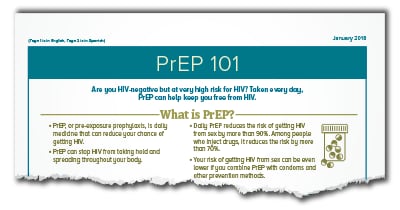
PrEP 101 thumbnail
Truvada for pre-exposure prophylaxis (PrEP) to prevent HIV transmission has been available to at-risk patients since it was approved by the FDA in 2012.  Despite this, it has found limited use among non-MSM (men who have sex with men) for HIV prevention. Truvada (emtricitabine/tenofovir disoproxil) is a pill that can be taken once a day that, when used consistently, can reduce the risk of acquiring HIV by more than 90%1.  Truvada is generally well tolerated and is covered by most private insurance and Medicaid.  The CDC currently recommends PrEP for women with a known HIV+ sexual partner, a recent bacterial STI, multiple sexual partners, inconsistent or no condom use, women living in high prevalence areas, or women who are commercial sex workers1.  The only criteria for starting PrEP are a negative HIV test and no signs/symptoms of acute HIV, normal renal function, and a documented hepatitis B status. 


Despite these generally broad recommendations for PrEP, few women are currently using it.  The use of PrEP has seen massive growth in the MSM community; however, the uptake of PrEP among women has been slow.  In data released by Gilead, the pharmaceutical company that produces Truvada, only 2,491 women were using PrEP in 2015 (approximately 20% of all patients using PrEP), which remained relatively stable from 2012 through 20152.  Yet, the CDC estimated in 2015 that 0.6% of women aged 18-59, or 468,000 women, had indications for using PrEP3.  Additionally, of those women initiating PrEP, significantly fewer African American women have used PrEP as compared with White women, despite being at greater risk of acquiring HIV2.  According to data from the CDC, African American women are the group of women most at risk of acquiring HIV4.  4,189 African American women were estimated to be newly diagnosed with HIV in 2016 as compared with 1,032 White women and 1,025 Hispanic women4.  This absence of PrEP use is likely due to patients and physicians underestimating patients' HIV risk as well as a lack of knowledge regarding the use of PrEP in heterosexual females.  Those aware of PrEP often think of it as something that is purely for the MSM population and do not think of women that live in communities with high HIV prevalence.  Discussing the initiation of appropriate heterosexual females on PrEP is something that should be prioritized by primary care physicians as a means of further preventing HIV transmission, particularly in communities with high HIV prevalence. 


  1. Centers for Disease Control and Prevention. Pre-exposure prophylaxis (PrEP) for HIV prevention. 2014. Available at: https://www.cdc.gov/hiv/pdf/PrEP_fact_sheet_final.pdf (accessed Dec 2017)
  2. Bush, S. Magnuson D, Rawlings MK, et al. Racial characteristics of FTC/TDF for pre-exposure prophylaxis (PrEP) users in the US.  ASM Microbe 2016, 16-20 June 2016, Boston, MA.  
  3. Smith DK, Van Handel M, Wolitski RJ et al. Vital signs issue details: estimated percentages and numbers of adults with indications for preexposure prophylaxis to prevent HIV Acquisition – United States, 2015. MMWR Morb Mortal Wkly Rep. 2015; 64: 1291–1295.
  4. Centers for Disease Control and Prevention. Basic Statistics.  Available at: https://www.cdc.gov/hiv/basics/statistics.html (accessed Dec 2017).
Alyssa Mezochow
DUCOM 2018

Validation of rights to preventive care and responsible primary preventive care for LGBTQ patients


LGBTQ persons tend not to seek care as often for services, such as pap smears and mammograms. Their reproductive organs may not serve their gender identity and therefore are neglected in terms of medical seeking behaviors.  One meta-analysis supported the fact that “health and utilization of healthcare services among LGBTQ individuals are adversely affected by marginalization; and

approximately 30% of LGBTQ adults do not seek healthcare services or lack a regular healthcare provider compared to 10% of age-matched heterosexuals.”
https://www.ncbi.nlm.nih.gov/pmc/articles/PMC4609168/https://www.kff.org/health-reform/fact-sheet/preventive-services-covered-by-private-health-plans/

 
Paps for Chaps

The current laws that provide pap smears and mammograms for transgender males are being threatened by publicly announced attitudes held by the highest seat of federal power this year.

One physician shared the frustration she experienced while navigating transgender healthcare for her patients on the heels of these public announcements this summer on the AAFP blog:


This problem could be avoided if legally, and in the electronic health care records, people can be identified by their biological reproductive organ status in compliment to their gender status. Some EHRs have transitioned to this holistic approach but insurance companies and the government have not yet adopted this strategy to better serve the health of its constituents.  Medical provider and healthcare societies such as the AAFP, AMA, APA, ACOG and many more  have supported the equality of rights for transgendered individuals which is a promising step in the right direction.


Educating the Medical Workforce
Further efforts have been made by the Association of American Medical Colleges (AAMC) to create a database to educate medical providers on how to create and maintain trusted physician patient relationships so as to appreciate the diversity of medical needs and risks within the interplay of gender identity, biological sex and sexual orientation that comprise individuals.  Particularly important to medical education is assessing how well providers are motivated to acquire knowledge and retain the skills to provide competent care for LGBTQ patients.


One resource for medical education tools in assessing Trainee Competence in LGBT Patient Care is the MedEdPortal.org, a peer-reviewed, open-access journal that promotes educational scholarship and dissemination of teaching and assessment resources in the health professions.
Learning modules created and sponsored by the Fenway Institute for the National LBGT Health Education center can be found here for interested students and providers.

Practice guidelines for endocrine treatment of LGBT individuals have just been updated this year by the Endocrine Society. This step is significant in providing structure for interdisciplinary collaboration, evaluating patient outcomes, and further highlighting the validity and appropriateness of medical treatments for this patient population.


My hope for my graduate medical training and for the students entering medical school is that institutions will embrace awareness of the need for climate change around LGBT health and implement a curriculum to suit these needs. We must be the outspoken advocates for protection of patients’ rights to care.


Lindsey Lee  DUCOM 2018


Thursday, December 7, 2017

Establishing a History of Trauma and Patient Advocacy in Light of #MeToo Viral Campaign


As emerging doctors in the early 21st century we will set the tone for helping our patients reconnect with the world after a jarring interface with assault/ harassment that is out of proportion with their emotional and psychological perspective on life. This is not just a fad but a stake of civil unrest that had an earlier voice this year with the worldwide Women’s March. 
The following articles in reaction to the recent #metoo campaign provide personal stories and insights from survivors and their doctors. http://www.aafp.org/news/blogs/freshperspectives/entry/20171019fp-metoo.html

For people affected by gender based harassment, violence and abuse of power, these experiences are real and violating though they did may not amount to physical sexual misconduct by the aggressing party. In my own experience as a medical student, a patient without regard for the professional setting of the hospital placed me in a very uncomfortable situation. He knew that my role was to assess his symptoms, and after I asked him if he was ready to discuss this with me he proceeded to masturbate in his hospital bed. I wasn’t sure if I should believe what I saw and asked if he needed to use the restroom before our interview. He said no while never stopping his activity. At that point I told him I would not be conducting the interview until he stopped and was ready to act appropriately, and walked out of the room. I felt frozen and unable to stop the sexually harassing behavior when it was not acknowledged by the aggressor and felt that I had somehow failed. After that encounter, every patient room in the hospital felt too small and hostile for a few weeks. This encounter broke the trust I had with professional settings and rules of common social decency.  

As physicians and providers of healthcare, we should provide validation of stories from all vulnerable populations, showing them that their trauma is real and relatable so as not to further isolate the person.  We can do this by normalizing the spectrum of reactions and acknowledging that reactions may manifest in other ways such as mental health issues, physical stress, social isolation, inability to care for family members, or inability to function efficiently and at a high level at work. The provider, as the listener, should not insinuate that the abuse of power and harassment was unrelatable or unbelievable.  These experiences are the social determinants of health, and we need to meet the patient where they are in their struggle of revealing their truth.

The CDC provides many resources on violence prevention and the consequences that victims may experience as a result. Interestingly, some studies have shown long term repercussions of these events such as decreased likelihood to marry, which could be speculated to stem from a distrust of intimate partners, shame and guilt, and fear of future trauma.

https://www.cdc.gov/violenceprevention/sexualviolence/consequences.html


Physicians can also pick up on new health risk behaviors that may clue them in to inquiring about past abuse or violent events. When screening and counseling patients Trauma Informed Care in Behavioral Health Services suggests the use of the SLE screening or the STaT intimate partner violence screening tool and offers the following:

Advice to Counselors: Screening and Assessing Clients

  • Ask all clients about any possible history of trauma; use a checklist to increase proper identification of such a history (see the online Adverse Childhood Experiences Study Score Calculator [http://acestudy.org/ace_score] for specific questions about adverse childhood experiences).
  • Use only validated instruments for screening and assessment.
  • Early in treatment, screen all clients who have histories of exposure to traumatic events for psychological symptoms and mental disorders related to trauma.
  • When clients screen positive, also screen for suicidal thoughts and behaviors (see TIP 50, Addressing Suicidal Thoughts and Behaviors in Substance Abuse TreatmentCenter for Substance Abuse Treatment [CSAT], 2009a).
  • Do not delay screening; do not wait for a period of abstinence or stabilization of symptoms.
  • Be aware that some clients will not make the connection between trauma in their histories and their current patterns of behavior (e.g., alcohol and drug use and/or avoidant behavior).
  • Do not require clients to describe emotionally overwhelming traumatic events in detail.
  • Focus assessment on how trauma symptoms affect clients’ current functioning.
  • Consider using paper-and-pencil instruments for screening and assessment as well as self-report measures when appropriate; they are less threatening for some clients than a clinical interview.
  • Talk about how you will use the findings to plan the client’s treatment, and discuss any immediate action necessary, such as arranging for interpersonal support, referrals to community agencies, or moving directly into the active phase of treatment. It is helpful to explore the strategies clients have used in the past that have worked to relieve strong emotions (Fallot & Harris, 2001).
  • At the end of the session, make sure the client is grounded and safe before leaving the interview room (Litz, Miller, Ruef, & McTeague, 2002). Readiness to leave can be assessed by checking on the degree to which the client is conscious of the current environment, what the client’s plan is for maintaining personal safety, and what the client’s plans are for the rest of the day.

Center for Substance Abuse Treatment (US). Trauma-Informed Care in Behavioral Health Services. Rockville (MD): Substance Abuse and Mental Health Services Administration (US); 2014. (Treatment Improvement Protocol (TIP) Series, No. 57.) Chapter 4, Screening and Assessment. Available from: https://www.ncbi.nlm.nih.gov/books/NBK207188/


Further, Trauma Informed Care in Behavioral Health Services suggests that screening for histories of trauma is a primary prevention in the development of behavioral health disorders and health risk behaviors. It is our duty as physicians to address physical and psychosocial determinants of health at every interaction with patients. After all, we may only interact with a patient once over the course of their lives and cannot assume their last interaction with a physician is an accurate depiction of the person presenting to us.

As a medical student, I have learned several valuable lessons on the wards, possibly the most important of which is to never assume the previous record is complete or correct.  People have ever changing histories and truths that we must explore before simplifying an interaction to a diagnosis and treatment plan.


Lindsey Lee

DUCOM 2018